


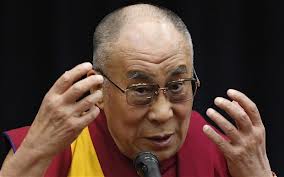
Contradiction in the Dalai Lama’s Public Statements
Based to current reports, the Dalai Lama recently issued statements regarding Dorje Shugden in a teaching at Gaden Monastery. In his speech, the Dalai Lama explained that the reason he had advised people not to practice Dorje Shugden was due to the divination result performed before the famous Palden Lhamo thangka (this holy thangka was worshiped by earlier incarnations of the Dalai Lama). The divination turned out to be unfavorable and hence, the Dalai Lama went all the way with the ban on Dorje Shugden.
According to the video below, the Dalai Lama claimed that he had not forced anybody to give up Dorje Shugden’s practice but merely told him or her the logic and reason behind His Holiness’s advice to cease the practice. In essence, what the Dalai Lama said in this particular speech was that monks who gave up the Shugden practice did so not because they feared going against the Dalai Lama’s ban, but because they “actually saw the reason and logic behind [ceasing] it” giving the impression that the monks voluntarily gave up the practice. The idea this was meant to convey was that those who gave up Dorje Shugden did so on their own accord.
However, not only is this not accurate, it is in fact in total contradiction to the truth and there is proof. In the video below, we see the Dalai Lama making statements which not only condoned the wrongful expulsion of Shugden monks, but actively encouraged if not enforced it. The weight of the Dalai Lama’s tone and the choice of words, indicated unmistakably that it was the Dalai Lama’s wish to have Shugden monks expelled. By praising and supporting monasteries that expelled Shugden monks and then going on to challenge monasteries that may have found it difficult to follow suit, the Dalai Lama said, “…tell them the Dalai Lama is responsible for this” There was no room to interpret that statement in any way, other than a directive.

In a culture where the Dalai Lama is the unquestionable supreme head of the people, the manner in which the Dalai Lama wishes for something means in fact, that there wasn’t a choice in the matter at all. Who in the Tibetan community would dare to go against the wishes of the Dalai Lama, both a king and a god in the people’s eyes? And this is something the Dalai Lama knew full well and exploited?
Instantly we see a contrast in the messages as conveyed in the two videos above. What the Dalai Lama said in the second video grossly contradicts his denial of the directive he gave to cease the practice of Dorje Shugden as mentioned in the first video above. There was also a remarkable difference in the way the contradictory messages were delivered – soft when the Dalai Lama wanted to deny that the expulsion of monks was his directive and forceful when his message was squarely to get rid of Shugden monks.

The aforementioned inconsistency is not an isolated case and it is only when we examine a series of messages by the Dalai Lama on the subject of Shugden that a pattern emerges. The following are various video evidences wherein statements by the Dalai Lama show how inconsistent and often self-conflicting the Dalai Lama has been with regards to his [apparent] stance on Dorje Shugden: -
In the video above, Samdhong Rinpoche as official representative of the Dalai Lama and the Central Tibetan Administration (CTA) clearly stated (see video from 6:30 to 7:30) that the “restriction” against the Shugden practice was not a demand or order but merely a religious advice, meaning there was a choice for individuals to choose whether to follow the advice or not.

But then in the following video, Evidence 2, we see a very different tone from the Dalai Lama on the same subject matter [see video from 39:01]. The Dalai Lama said on that occasion, “Initially, I haven’t been very firm with Shugden practice but some people push themselves too far. This is why I have to speak firmly last time…”
If indeed the restriction on the practice is merely an advice as the Dalai Lama had professed, why then is there a need to step up and “be firm” if not to coerce monks into giving in to the Dalai Lama. Also note that the demeanor of the Dalai Lama in the video is not that of one giving advice but more an “obey-or-else” posture.

Furthermore, witness the following video (see video Evidence 3 below from 1:14) where the Dalai Lama stated without any doubts, “…Lamas, Geshes and Dharma friends. I tell you this issue (referring to the Shugden ban) is very important and you MUST ENFORCE what I say”. If there was any doubt as to the Dalai Lama’s intention, then it was cleared up in the same video (see video at 1:27) when the Dalai Lama in referring to those who were of the opinion that enforcing the ban was not their responsibility stated, “…Then that way of thinking is WRONG. Understood?” And then the Dalai Lama went to say that for the people not to take his “advice” would be “…very disappointing for me. Understood”? [See video at 1:57]. The Dalai Lama’s true position on the Shugden practice was displayed with full clarity when he openly stated (see video evidence 2 at 2:54), “I began this BAN to continue the Fifth Dalai Lama’s legacy, I started this myself and I have to carry it to the end. Understood?”

Here, it is vital to note that by the Dalai Lama’s own account, it was in fact a ban, not an advice and that it was the Dalai Lama who imposed the ban and forced it upon the people. There was no free will as such and therefore the Dalai Lama’s suggestion that monks should say that they had given up the practice on their own accord, was at best another intimidating directive.
Not withstanding that the Dalai Lama’s justification of following the legacy of the Fifth Dalai Lama was grossly misleading (the Great Fifth was a practitioners of Dorje Shugden (see http://www.dorjeshugden.com/introduction/spiritual-lineage/the-time-of-the-great-fifth/) a clear picture arises and it is a disturbing one – the Dalai Lama initiates an unholy ban and not only enforces it but also coerces the people to be his enforcers. But instead of being open about his real intention, disguises the ban as a mere advice and instructs the monks to lie and tell the public that the reason they gave up the practice was because they agreed with the reasons behind it, not because they feared going against the Dalai Lama and the CTA.

And what is the basis of this fear of not obeying the Dalai Lama’s so-called “advice”? Well, as we will see in the following video, Evidence 4, not obeying the ban carried with it heavy penalties. Shugden practitioners cannot function properly within the Tibetan community, the result of the Dalai Lama having imposed the responsibility of enforcing the ban on all Tibetan people. In addition they will be regarded as “terrorist” and enemies of the Tibetan state as Samdhong Rinpoche, the then Prime Minister of the CTA and representative of the Dalai Lama proclaimed all Shugden worshippers. [See video 4 from 1:57 – 3:00]
What is also important to note is the deafening silence from the Dalai Lama’s office when someone such as Geshe Kelsang Gyatso who is highly learned in Buddhist scriptures challenged the Dalai Lama for his real reasons behind the ban as we saw in video Evidence 5 above.

Geshe Kelsang Gyatso wrote a series of open letters to the Dalai Lama requesting His Holiness for proper justification of the ban, and an audience to discuss this matter. (See video 5 from 4:35 – 4:49) Unfortunately, the Dalai Lama’s office has to date, refused to grant this request and instead maintained silence on this matter. Why would the office of the Dalai Lama be silent if they had any concrete scriptural proof to back up their claims regarding Dorje Shugden, especially if such evidence could lead possibly the most visible and one of the most influential Shugden lamas in the world, to recant his advocacy of the Protector practice?

It is indeed mystifying that in a religion that stresses guru devotion above all else, the Dalai Lama should chose to take the advice of spirits which he himself claimed to be the cause of degeneration of the faith, over the advice of his own teachers. In the following video evidence 4, the Dalai Lama unabashedly stated that his teacher the great and erudite master Kyabje Trijang Rinpoche and the old lineage masters were all wrong.
By calling Dorje Shugden a spirit, the Dalai Lama denied his own Guru, Kyabje Trijang Rinpoche’s attainments and knowledge and that of masters of old. Trjang Rinpoche regarded Dorje Shugden as a fully enlightened being, and worshipped him as well as taught others to regard the Protector as such. We saw how the Dalai Lama claimed that his teachers were all wrong about Dorje Shugden. By doing that, he undermined the credibility and validity of all the teachings that he himself had received from Kyabje Trijang Rinpoche. That being the case, if the Dalai Lama’s teachers can be wrong about something as important as Dorje Shugden’s practice, then it should follow that the Dalai Lama could also have received the wrong monastic education and accordingly the Dalai Lama could also be wrong about any of the teachings he gives. In that way, the Dalai Lama has effectively undermined the credibility of the entire lineage that was established by Je Tsongkhapa himself. (This point is covered extensively in another article called ‘Has the Gelug lineage lost its effectiveness?’ – http://www.dorjeshugden.com/all-articles/the-controversy/has-the-gelug-lineage-lost-its-effectiveness/)

And herein lies yet another contradiction. If indeed the Dalai Lama truly believed that his teacher Kyabje Trijang Rinpoche was wrong about Dorje Shugden and that the worship of the Protector is harmful to the Dharma, then why would he permit Trijang Choktrul Rinpoche, the present incarnation of the Dalai Lama’s teacher to continue in perpetuating a wrong and harmful practice, as evidenced in video 5 below? (See video evidence 9 from 0:32)
Dalai Lama said that Trijang Choktrul Rinpoche could practice Dorje Shugden because he made an exception. What was the reason for allowing this exception when the Dalai Lama had already claimed that it was wrong to continue the practice? If Dorje Shugden is truly a spirit and the worship of this “spirit” would spell doom for the Buddha dharma, then why allow it to continue with a young lama who is maturing to be one of the most influential Buddhist masters in the world? This does not make any sense whatsoever.

The lies and incoherence surrounding the Dorje Shugden issue is endemic within the leadership of the Tibetan people. In the following video, Evidence 6, we see a representative of the Dalai Lama claiming that there has been no discrimination of Shugden practitioners within the community.
there is clear evidence of ‘spiritual apartheid’, including:

1. Dorje Shugden practitioners being denied entry into stores, shops and hospitals. This discrimination results in Tibetans being denied access to food, basic social services and medical care.

2. Tibetans made to take oath that they will deny material and spiritual support to any Dorje Shugden practitioners.

3. Portraits of Dorje Shugden practitioners being posted on walls outside shops, government buildings and so on, like common criminals.

4. Dorje Shugden practitioners being shunned by their own community, and living in fear from being physically harmed.

5. Dorje Shugden practitioners are being accused as traitors, rebels, Chinese spies and collaborators. They are thus targeted, like in medieval witch-hunts, by the local Tibetans who have been falsely misled.

6. Monks having to choose between abandoning their propitiation to Dorje Shugden or face expulsion from the monastery, the only homes they have.

Again, we see that the way the Dalai Lama and the Tibetan leadership have been been portraying the Shugden issue to the world is in fact extremely fraudulent. The truth about the ban is in fact ugly. Throughout the entire process of imposing and enforcing the ban over the years, which can be best described as obscene and deceitful, the Dalai Lama and the CTA maintained a blind denial that no Dorje Shugden practitioner has been harmed. This is however another lie. In the following video, Evidence 11, we see clearly how a group of lay pro-Dalai Lama supporters stoned a Dorje Shugden monastery. Why does the Dalai Lama and also the CTA continue to deny such obvious maltreatment that has been inflicted on Dorje Shugden practitioners? Since the CTA does not condemn such a heinous act, it would seem that the CTA is also in collusion, if not instigating violence to be perpetrated on Dorje Shugden practitioners.
As the Dalai Lama preaches peace, harmony and tolerance to the world, his acceptance of scenes as shown in the video above belie his true intention – a much more sinister one towards Shugden worshippers. This is what the Dalai Lama had to say about people who do not agree with his “advice”, when he addressed the monks in Trijang Ladrang in 1999, “If those who do not accept the ban do not listen to my words, the situation will grow worse for them. You sit and watch. It will only grow worse for them…? A thinly veiled threat, which was far from a friendly advice.

By viewing and examining the video evidences contained herein and by sifting through the myriad of incongruities, we will see a cunning design. The apparent inconsistencies and contradictions in the various speeches and statements by the Dalai Lama and his representatives on the subject of Dorje Shugden, in fact has a certain pattern which is best summarized as follows:

1. The Dalai Lama is forceful and his tone harsh when he addresses a Tibetan audience, especially monks, upon whom the Dalai Lama imposed his will knowing that he cannot be challenged. To this audience, there is no question of an outright ban which carried heavy repercussions if ignored;
2. At the same time and especially to the international community, the Dalai Lama and his representatives deny that there is even a ban on the Protector practice and suggest instead that the restriction is merely an advice. The Dalai Lama’s tone is never harsh but soft and contrived. The Dalai Lama offers baseless reasons for the ban such as it being the worship of spirit;
3. Faced with scriptural challenges on the reasons and justifications of the ban, the official reaction is to remain silent instead of complying with requests for discussions and debates, as has been the tradition in monasteries for centuries – a practice designed to uncover the truth and provide comprehensive understanding of all scriptural matters;

It is also obvious that as time passed and as the Shugden ban receives more attention from the international community and scholars, the Dalai Lama’s public position on Dorje Shugden also shifted, to avert criticism of his hostility towards a religious practice. This is best summed up as such:

1. At the beginning of the ban the Dalai Lama was uncompromising and forced the ban upon the people without much regard to their opinions and thoughts. The Dalai Lama made it clear that it was all Tibetan people’s responsibility to follow his ban and should they decide not to, things would become worse for them.
2. By 2011 and during the Kalachakra initiation in Washington DC, the forcefulness diminished and it became an individual choice. (See video below). But still, the choice not to abandon the practice carried with it a condition, which was not to receive any teachings and initiations by the Dalai Lama;
3. Most recently (2013) in the Dalai Lama’s speech to the monks at Ganden Shartse, the Dalai Lama’s message to the monks was to say that the reason they abandoned the Shugden practice was not due to the ban and not in obedience to the Dalai Lama’s instructions, but instead due to their individual reasoning that the “logic” behind ceasing the practice was sound. Moreover, it was Palden Lhamo who apparently divined for the Shugden practice to be stopped. And with that, the Dalai Lama seems to have washed his hands off any involvement in the enforcement of an unholy and illegal ban.

How does one explain this shift in tone and message by the Dalai Lama on the same subject of Dorje Shugden? It would appear that the Dalai Lama would tailor the delivery and tone of his message based on what he may get away with, so to speak. The Dalai Lama would muscle his way through with an audience that cannot question him, and at a time when relatively little was known about the deity outside the monasteries. And as more awareness grew about the ban, the Dalai Lama seems to be soft-padding his position on the deity, especially with a world audience that has begun to challenge him based on sacerdotal arguments and scriptural logic. Most recently, the Dalai Lama stance on Dorje Shugden has been one where he has virtually denied his hand in enforcing the ban and instead claimed that it has been individual decisions with no bearing to him.

At the very least, this shows a lack of conviction on the Dalai Lama’s part with regards to the ban, perhaps due to the fact that reasons for the ban is devoid of any solid substance that can hold up under any investigation by any audience in the world. In any case, if the Dalai Lama is true to his most recent stance on the deity, and if by reason and logic one should decide to take up or indeed continue with the practice of Dorje Shugden, then there should be no repercussions at all and this should be made clear and official both by the Dalai Lama and the CTA. If there is one sure test of a Truth, then it must that it is always consistent regardless of era and who the truth is being preached to. Take for instance the Dharma that the Buddha himself taught over 2500 years ago. It has always been consistent and have always stood up to all forms of examinations. That the Dorje Shugden ban and the reasons behind the ban have shifted so much over time, and manufactured and remanufactured only indicate that there has never been any validity behind the ban at all.
Category:
Can you be more specific about the content of your article? After reading it, I still have some doubts. Hope you can help me. https://accounts.binance.com/register-person?ref=IHJUI7TF
Your point of view caught my eye and was very interesting. Thanks. I have a question for you.
I don’t think the title of your article matches the content lol. Just kidding, mainly because I had some doubts after reading the article.
Thank you for your sharing. I am worried that I lack creative ideas. It is your article that makes me full of hope. Thank you. But, I have a question, can you help me?
Your point of view caught my eye and was very interesting. Thanks. I have a question for you. https://www.binance.bh/de/register?ref=W0BCQMF1
Thanks for sharing. I read many of your blog posts, cool, your blog is very good. https://www.binance.bh/futures/ref?code=JW3W4Y3A